


 80 / 213

12-B Maine Antique Digest, March 2017
-
AUCTION -
12-B
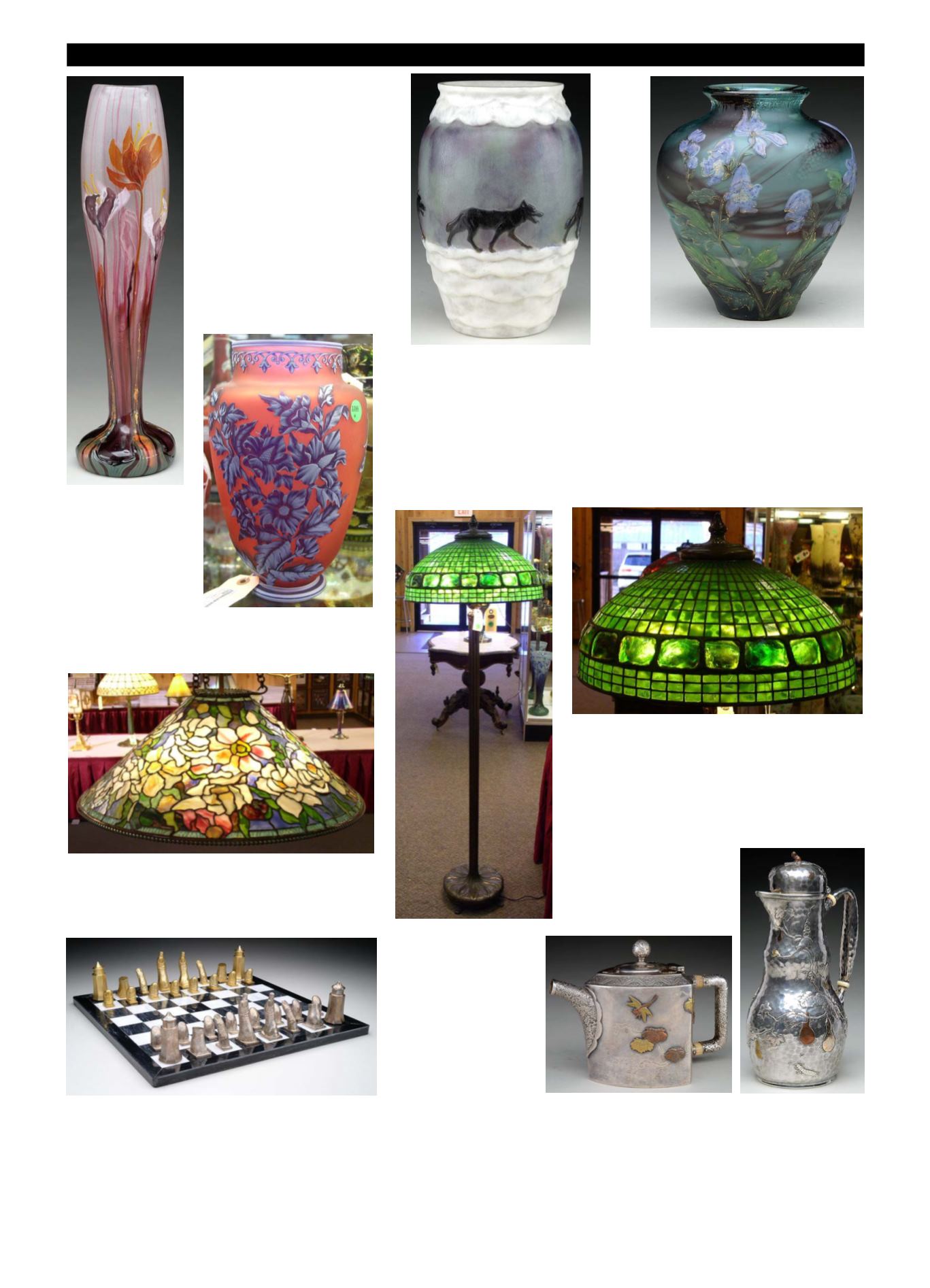
This large (17" tall) Gallé vase with
orange, purple, and white marquetry
wheel-carved crocuses with reddish
stems that blend with a striped red
and pink background, and standing
on a base embedded with copper foil
inclusions, sold within the estimate for
$52,732.50. Julia photo.
This is a
pâte-de-verre
vase by Gabriel Argy-
Rousseau with a ring of black wolves walking
across a field of snow against a mottled purple
and gray background. Argy-Rousseau produced
about 200 to 300 designs from 1914 until
1937. He was an innovator of the
pâte-de-verre
technique, in which a paste of finely ground
glass is applied with a binding material, which
is then fired in a negative mold. Signed “G.
Argy-Rousseau” and impressed “France” on
the base, the vase closed within the estimate for
$34,957.50. Julia photo.
Estimated at $7000/10,000, this Burgun and
Schverer cameo vase did well to hit $13,035.
It is decorated all around with wheel-carved
lavender flowers with lightly gilded highlights
and patches of martelé glass, à la Emile Gallé,
who apprenticed with the company. It is
identified on the base with a typically elaborate
gilt thistle mark. Founded way back in 1711,
the French firm Burgun Schverer et Cie began
producing cameo glass in 1895 by painting and
carving works in multiple glass layers. The
glassworks closed in 1969. Julia photo.
Here’s a Thomas Webb &
Sons cameo vase with purple
and white flowers on one
side and a similarly colored
butterfly on the back, all on a
frosted reddish background.
The “cameo” term refers to
the process of etching and
carving the designs through layers of glass infused with different
colors. With the circular Webb mark on the base, this one brought
$22,515, just slightly north of the high estimate.
This Tiffany Studios floor lamp has green glass with small
rectangular tiles surrounding a single row of turtleback tiles that
stand out like uncut emeralds. The 20½" diameter shade is signed
“Tiffany Studios New York 1487-1” on the rim. It stands on a
signed junior floor base embossed with onion bulbs and tendrils
formed of applied bronze wire running all the way up the shaft. It
scored a near bull’s eye on the $25,000/35,000 estimate, ending at
$29,625.
This Tiffany Studios chandelier, filled with white and amber
peonies on a blue confetti glass background, fared well at $53,325,
despite some minor hairlines and some professional repairs that are
detectable only by comparison with the identical lamp as it was sold
at Christie’s way back in May of 1980.
Salvador Dali designed this sterling silver chess set, and jeweler F. J.
Cooper of Philadelphia manufactured 45 of them, of which this one
is number eight. Most of the pieces were cast from Dali’s own fingers
except for the queens and rooks. According to several sources, the
set was conceived as a homage to Marcel Duchamp. The queens were
modeled on the thumb of Dali’s wife, Gala, and the rooks were made
in the form of salt and pepper shakers from the St. Regis Hotel in
New York City. In a bizarre touch, the tops of the kings and queens
were said to be molded from the artist’s own nipples or teeth. It was
game over at $17,775 (est. $5000/7000). Julia photo.
The Tiffany & Company sterling silver and mixed-metal chocolate
pot (right) weighed in at about 22.5 troy ounces, but the value came
from the name and the design. Gold and copper dragonflies and other
insects buzz around the surface amid tendril-wrapped leaves, stems,
and hanging gourds, and the full mark on the base reads “Tiffany &
Co. / 5125 Makers 6654 / Sterling – Silver / -And- / Other Metals / 376.”
Ivory insulator rings on the handle necessitated the Endangered Species
Act disclaimer, but it still sailed well past its $10,000/15,000 estimate to
$40,290. A similarly designed and marked Tiffany silver and mixed-metal
teapot likewise trashed its estimate ($3000/5000) and stopped at $17,775.
Julia photos.